Sharp increases in targeted vandalism and campus antisemitism point to deepening crisis across the region
Seattle, WA. April 22, 2025 … The Anti-Defamation League (ADL) today released its annual Audit of Antisemitic Incidents revealing a troubling surge in antisemitic vandalism and campus-related antisemitism across the Pacific Northwest in 2024. While the total number of harassment incidents slightly decreased, the region experienced unprecedented spikes in specific categories, signaling an intensifying atmosphere of hate.
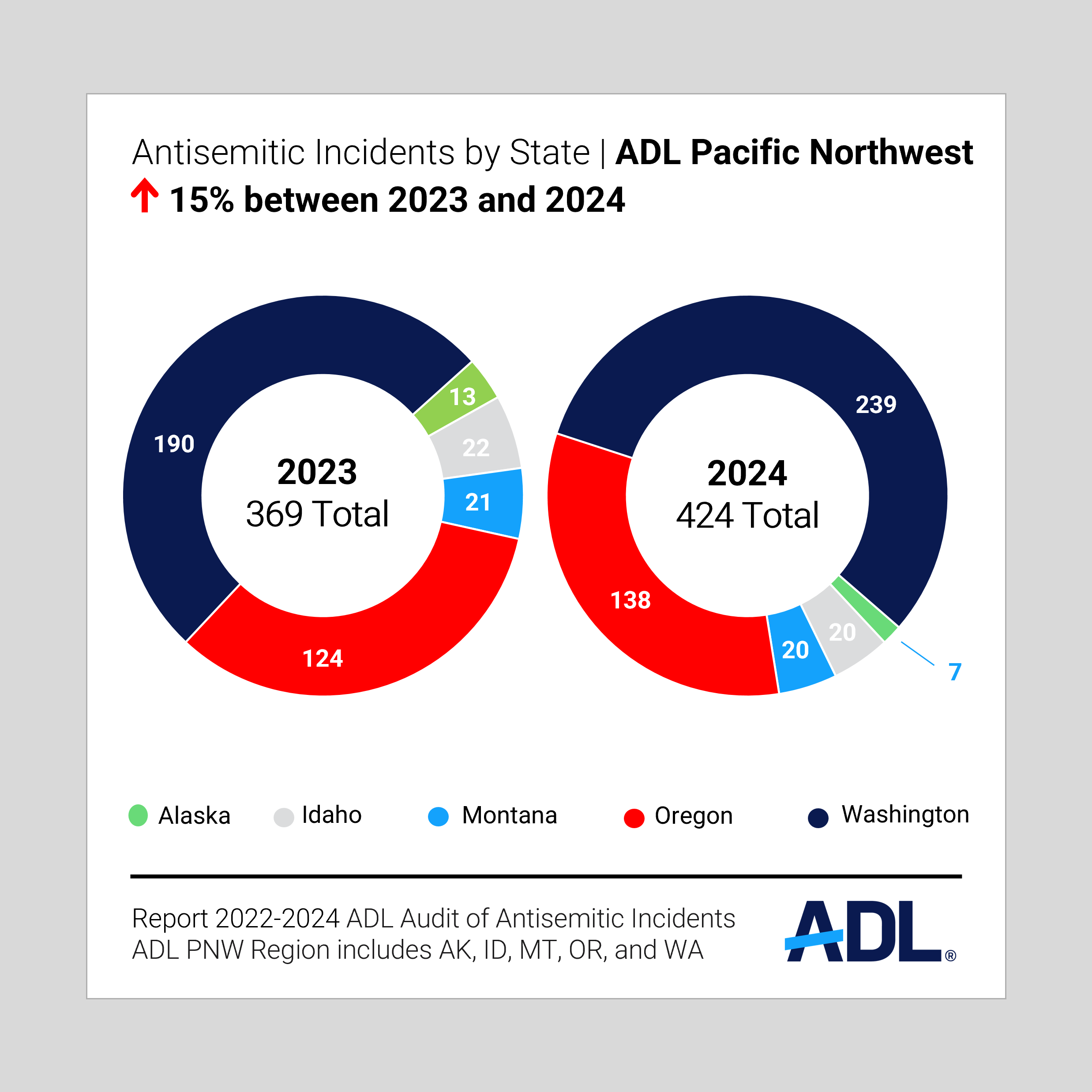
According to the newly released data, the Pacific Northwest Region, which includes Washington, Oregon, Idaho, Montana and Alaska, recorded:
- 424 total antisemitic incidents — up 15% from 369 incidents in 2023
- 286 incidents of antisemitic harassment — down 4% from 299 in 2023
- 134 incidents of antisemitic vandalism — up 103% from 66 in 2023
- 4 incidents of antisemitic assault — no change from 2023
- 85 campus-related incidents of antisemitism — up 175% from 31 in 2023
See the “Regional Findings” section further down for state-specific data.
Nationally, ADL recorded 9,354 incidents of antisemitic assault, harassment, and vandalism in 2024 — the highest total since ADL began tracking such data in 1979.
“The spike in antisemitic vandalism and the escalation of hate targeting Jewish students on campuses should alarm everyone,” said Miri Cypers, ADL Pacific Northwest Regional Director. “While harassment numbers may have dipped slightly, the dramatic rise in property damage and the hostile climate on college campuses make clear that antisemitism in our region is not only persistent, but it is also evolving.”
Campus-related antisemitic incidents more than doubled, reflecting growing tensions and increased targeting of Jewish students and faculty in the wake of the October 7 Hamas terror attacks and the ensuing war in Israel and Gaza. From flyers blaming Jews for global conflicts to disruptions of Jewish campus events and displays of Nazi imagery, the breadth and frequency of these incidents underscore an urgent need for institutional accountability and support for Jewish communities.
“Jewish students across the Pacific Northwest are being marginalized, simply because of who they are,” said Cypers. “We are calling on university administrators and civic leaders to take decisive action to protect Jewish students and make it clear that antisemitism has no place in our schools or our society.”
Despite the small decline in harassment, vandalism which includes swastikas graffitied on synagogues, Jewish homes, and community centers, more than doubled. This rise in hateful symbolism and property destruction adds a new layer of intimidation to the Jewish community across urban and rural areas alike.
“This is not just graffiti, it’s an attack on identity,” Cypers added. “We must come together across faiths, communities and institutions to confront this hate with resolve and unity.”
ADL Pacific Northwest continues to work with law enforcement, school districts, and universities to track antisemitic trends and build long-term solutions that foster tolerance, education and respect.
How the Public Can Support the Fight Against Antisemitism
Good data drives good policy. With ADL’s extensive tracking of antisemitic incidents, the organization can successfully advocate for legislation to protect the Jewish community. If you experience or witness an incident of antisemitism, please report it to it to ADL at www.adl.org/report-incident.
You can contact your local legislator to urge them to advocate to increase funding for the state Nonprofit Security Grant Program which protects faith institutions from the barrage of extremist threats they face every day, enhance Holocaust education across all educational levels, and affirm the IHRA Working Definition of Antisemitism as a framework for understanding classic and modern manifestations of this hate.
Regional Findings
Washington
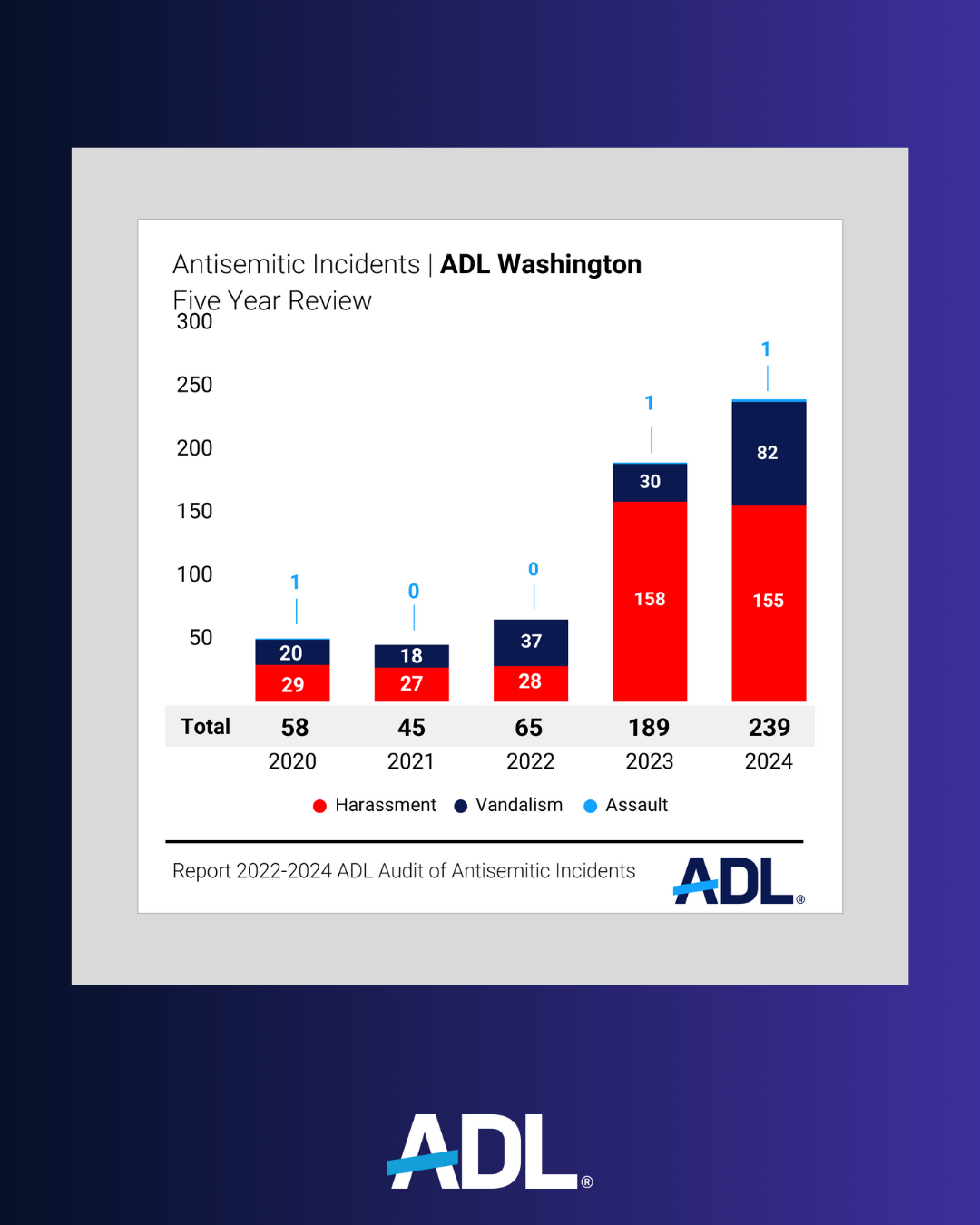
- 239 total antisemitic incidents — up 26% from 189 incidents in 2023
- 155 incidents of antisemitic harassment — down 2% from 158 in 2023
- 82 incidents of antisemitic vandalism — up 173% from 30 in 2023
- 2 incidents of antisemitic assault — up 100% from 1 in 2023
- 44 campus-related incidents of antisemitism — up 159% from 17 in 2023
Oregon
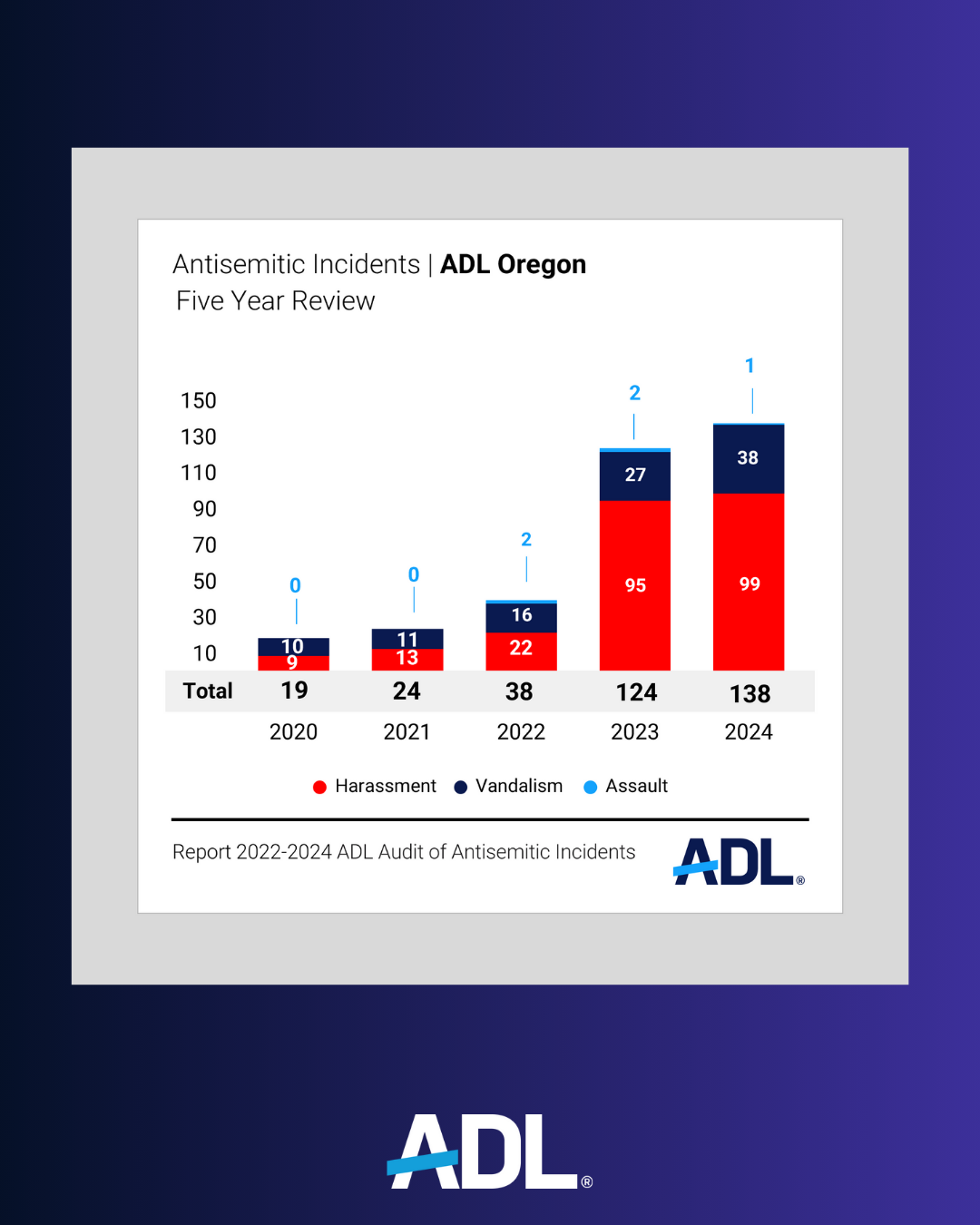
- 138 total antisemitic incidents — up 11% from 124 incidents in 2023
- 99 incidents of antisemitic harassment — up 4% from 95 in 2023
- 38 incidents of antisemitic vandalism — up 41% from 27 in 2023
- 1 incident of antisemitic assault — down 50% from 2 in 2023
- 38 campus-related incidents of antisemitism — up 171% from 14 in 2023
Montana
- 20 total antisemitic incidents — down 5% from 21 incidents in 2023
- 14 incidents of antisemitic harassment — down 22% from 18 in 2023
- 6 incidents of antisemitic vandalism — up 100% from 3 in 2023
- 0 incidents of antisemitic assault — no change from 0 in 2023
- 1 campus-related incident of antisemitism — up 100% from 0 in 2023
Idaho
- 20 total antisemitic incidents — down 9% from 22 incidents in 2023
- 12 incidents of antisemitic harassment — down 29% from 17 in 2023
- 7 incidents of antisemitic vandalism — up 75% from 4 in 2023
- 1 incident of antisemitic assault — no change from 0 in 2023
- 2 campus-related incidents of antisemitism — up 200% from 0 in 2023
Alaska
- 7 total antisemitic incidents — down 46% from 13 incidents in 2023
- 6 incidents of antisemitic harassment — down 46% from 11 in 2023
- 1 incident of antisemitic vandalism — down 50% from 2 in 2023
- 0 incidents of antisemitic assault — no change from 0 in 2023
- 0 campus-related incidents of antisemitism — no change from 0 in 2023
Major Findings
- 9,354 incidents of antisemitism across the United States representing a 5% increase from 2023. The massive spike in antisemitic incidents following the Oct. 7 massacre in Israel continued in 2024, with totals again exceeding any other annual tally in the past 46 years. The 12-month total for 2024 averaged more than 25 targeted anti-Jewish incidents in the U.S. per day, more than one an hour.
- Assaults: 196 incidents (a 21 percent increase from 2023) were categorized as assault, defined as cases where Jewish people (or people perceived to be Jewish) were targeted with physical violence accompanied by evidence of antisemitic animus. Orthodox Jews were targeted in 30 percent of assaults. The 196 incidents of assault targeted at least 250 victims, none of these assaults were fatal.
- Vandalism: 2,606 incidents (a 20 percent increase from 2023) were categorized as vandalism, defined as cases where property was damaged along with evidence of antisemitic intent or where there was an antisemitic impact on Jews. Swastikas, which are generally interpreted as symbols of antisemitic hatred, were present in 37 percent of these cases.
- Harassment: 6,552 incidents (up from 6,535 incidents recorded in 2023) were categorized as harassment, defined as cases where one or more Jewish people (or people perceived to be Jewish) were harassed with language that includes antisemitic slurs, stereotypes or tropes. There were 647 bomb threats. The harassment category also includes many of the expressions of antisemitism occurring at anti-Israel rallies described above.
- Incidents on (or around) college and university campuses rose more steeply than any other location type. In 2024, ADL recorded 1,694 antisemitic incidents on college campuses, which is 84 percent higher than in 2023. Campus incidents comprised 18 percent of all incidents, a larger proportion than in any previous Audit.
- Antisemitic activity also increased by 19 percent in public areas (3,452 incidents) and by 11 percent at business establishments, including Jewish-owned businesses. 860 incidents were reported at non-Jewish K-12 schools in 2024, a decrease of 26 percent. Given the insidious nature of bullying, compounded by the fact that many children may not feel empowered to report their experiences, it is likely that the actual number of school-based antisemitic incidents was significantly higher than the data reported in the Audit.
- Antisemitic incidents occurred in all 50 states and the District of Columbia. The states with the highest levels of incidents were New York (1,437) and California (1,344). Their largest cities, New York City (976) and Los Angeles (297), also reported the most incidents.
Targeting of Jewish Institutions
While incidents decreased by 14 percent at Jewish institutions, they remained elevated compared to pre-October 7 levels, with 1,702 incidents recorded in 2024. Moreover, assaults at Jewish institutions more than doubled(from 9 to 20 incidents) and vandalism increased by 39 percent (from 148 to 205 incidents).
Jewish organizations were targeted with a total of 627 bomb threats, 89 percent of which targeted synagogues. Congregants were harassed and even assaulted; some anti-Israel groups also escalated their tactics, protesting Jewish religious and cultural institutions on dozens of occasions.
Methodology
The ADL Audit includes both criminal and non-criminal acts of harassment, vandalism and assault against individuals and groups as reported to ADL by victims, law enforcement, the media and partner organizations and evaluated by ADL’s experts.
The complete dataset for antisemitic incidents for 2016-2024 is available on ADL’s H.E.A.T. Map, an interactive online tool that allows users to geographically chart antisemitic incidents and extremist activity. The full dataset can also be downloaded by anyone who would like to take a closer look at individual incidents.
ADL is careful to not conflate general criticism of Israel or anti-Israel activism with antisemitism. Legitimate political protest, support for Palestinian rights or expressions of opposition to Israeli policies is not included in the Audit. ADL’s approach to Israel-related expressions comports with the IHRA definition of antisemitism.
The complete Audit methodology is included in the report on our website.
The Audit offers a snapshot of one of the ways American Jews encounter antisemitism, but a full understanding of antisemitism in the U.S. requires other forms of analysis as well, including public opinion polling, assessments of online antisemitism and examinations of extremist activity, all of which ADL offers in other reports, such as: ADL Survey of Antisemitic Attitudes in America 2024, Campus Antisemitism One Year After the Hamas Terrorist Attacks,the ADL Global 100: Index of Antisemitism, Online Hate and Harassment: The American Experience and White Supremacist Propaganda Assessment Focused on Jews and Immigrants in 2024.